Sounds of Steel: Introduction
Lead Artist and Artistic Research: Nell Catchpole
Sociological Research: Sarah Irwin
Photography and Video: Rachel Deakin
Project Manager: Dianne Bowell
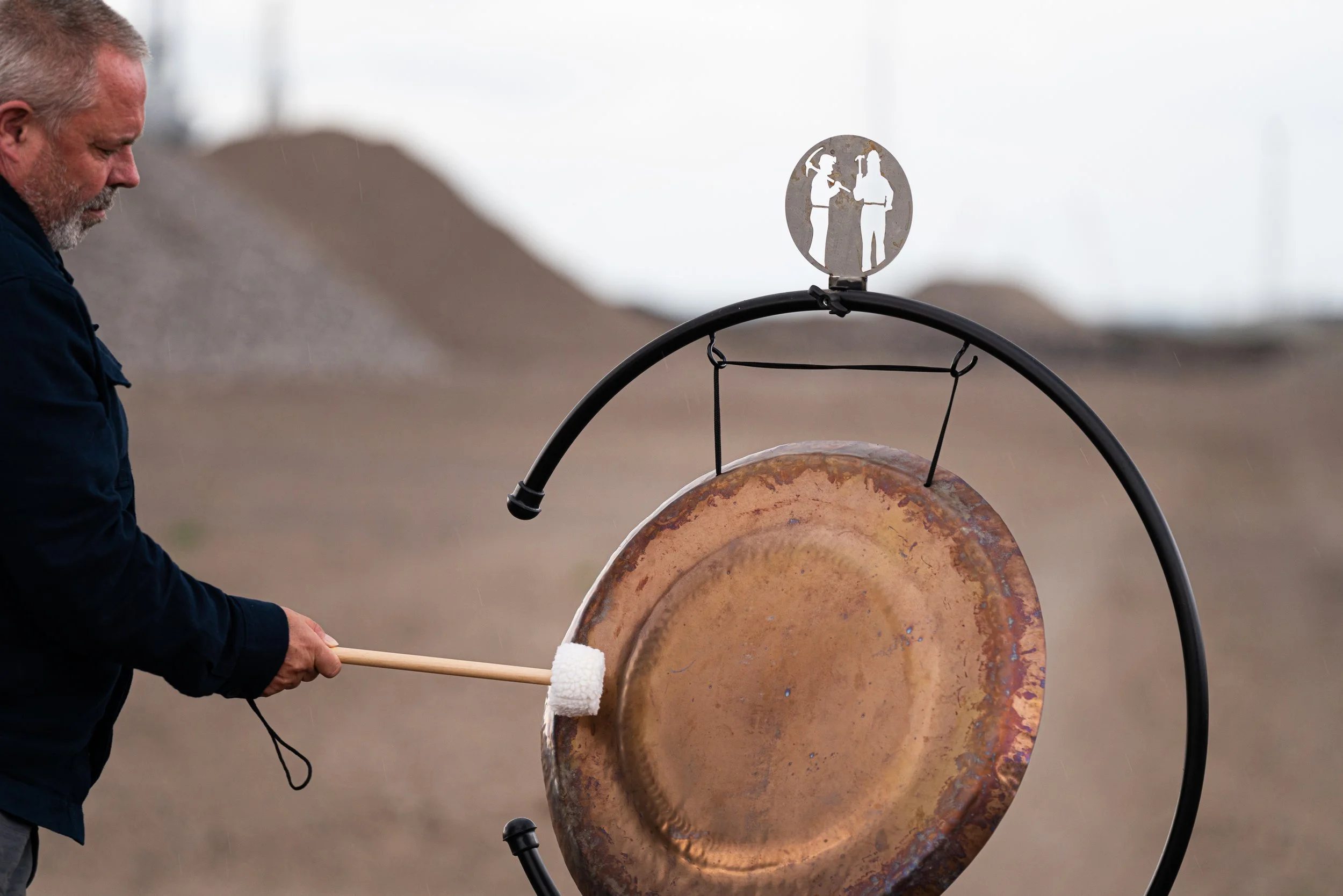
Gongs of Teesside: Sounds of Steel is a collaborative sound art and social science research project supported by Historic England and the University of Leeds. Bringing together sound art practice-as-research and qualitative sociological enquiry, it investigates how artistic listening practices and social inquiry deepen understanding of how people experience, interpret, and imagine place amid processes of industrial, environmental, and social change.
Teesside has a rich regional history of industrial growth and decline, deprivation, resilience and renewal. However, in political discourse it is often characterised as a "left behind" region, a shorthand which flattens lived complexity and dynamism. We have engaged with different generations of local people in exploring their affective engagement with local places, listening to the rich meanings they ascribe to these places, and their views about possible futures.
Gongs of steel were made for the project by local blacksmiths with additional guidance from further afield. We then ran communal gong soundings in places chosen by local people, with a felt connection to the area’s heritage.
The project explores how gong-soundings open up relationships to place, landscape and social change. Listening becomes both a research method and an ethical stance: a way of attending to the partial, situated, and sometimes ambivalent relations through which people experience belonging and change.
We spent time with our collaborators and participants through the gongs’ journey, from their creation to ceremonial soundings at the blast furnace remains on Teesworks and in community contexts across East Cleveland. Young adults were involved throughout, helping to document the gong making and soundings, and to curate an exhibition of the project. We also held several group discussions, small group interviews and one-to-one interviews with our participants to explore in depth their reflections on the gong soundings and place, their memories, and their views about social changes in the region including plans for industrial renewal.
The project integrates creative and qualitative methodologies — interviews, group conversations, and participatory sound events — to explore how meaning is produced through embodied, sensory, and social encounters. The work resists reductive narratives of progress or decline, emphasising instead the importance of ambivalences and the value of attentiveness within contested landscapes.
Drawing on sound studies, feminist theories of situated knowledge and sociology, our project demonstrates how collaborative artistic practice can create space for plural perspectives, reciprocal listening and substantive insight. Sounds of Steel highlights the importance of place-sensitive approaches that engage with peoples’ affective experiences, contributing to broader debates about the role of art and social science in supporting just environmental transitions.